This is default featured slide 1 title

Go to Blogger edit html and find these sentences.Now replace these sentences with your own descriptions.This theme is Bloggerized by Lasantha Bandara - Premiumbloggertemplates.com.

This is default featured slide 2 title

Go to Blogger edit html and find these sentences.Now replace these sentences with your own descriptions.This theme is Bloggerized by Lasantha Bandara - Premiumbloggertemplates.com.

This is default featured slide 3 title

Go to Blogger edit html and find these sentences.Now replace these sentences with your own descriptions.This theme is Bloggerized by Lasantha Bandara - Premiumbloggertemplates.com.

This is default featured slide 4 title

Go to Blogger edit html and find these sentences.Now replace these sentences with your own descriptions.This theme is Bloggerized by Lasantha Bandara - Premiumbloggertemplates.com.

This is default featured slide 5 title

Go to Blogger edit html and find these sentences.Now replace these sentences with your own descriptions.This theme is Bloggerized by Lasantha Bandara - Premiumbloggertemplates.com.

Tuesday, 6 January 2015

Immediate Adenotonsillectomy in childrens result in good outcome

Tonsillectomy: A tonsillectomy is the surgery to remove the Tonsils.

Adenotonsillectomy: Adenotonsillectomy is the surgical removal of both adenoids and tonsils.

The main reasons for Adenotonsillectomy are:
1. Disordered breathing at nights (Sleep disordered breathing)
2. Tonsillitis and chronic tonsillitis and
3. Obstructed breathing.

    Tonsils and adenoids are the lumps of  tissues that formed at the neck reasons and other parts of body. Tonsils present at either sides of the back of the throat.
Adenoids present at the back of the nose where nose and throat meets. We cant see the adenoids without usage of special instrument.
   
     Tonsils and adenoids are generally larger in children and become smaller in adults by shrinking. They are the part of immune system and there is no harm to the immune system if they removed by surgery. So in several children the tonsils are removed in case of infection at early stages of age.

Problems of tonsillitis:
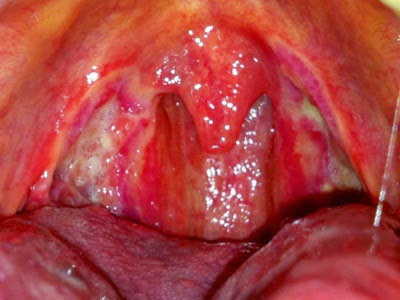
If tonsils and adenoids become enlarged they cause narrowing of airways.
Children face breathing problem at the time of sleeping.
Swallowing difficulty.
Pain at neck reasons.

Enlarged tonsils

Tonsillitis


Reasons for Adenotonsillectomy:
For recurrent acute tonsillitis
For sleep disordered breathing.

Benefits of Adenotonsillectomy:
Children who are suffering from tonsillitis have elevated obstructive apnea-hypopnea indices and more persists desaturations below 80%. They require frequently supplemental oxygen for survival. But after completion of surgery children do not need supplemental oxygen. Patients recover with in 10 to 15 days after surgery.
Tonsillectomy
Every parent need to aware about tonsillitis. They need to know about symptoms, signs, causes and when one have to go for surgery for surgery.


an adenotonsillectomy is an operation to remove both the adenoids and tonsils - See more at: http://www.kidshealth.org.nz/tonsillectomy-and-adenotonsillectomy#sthash.anpKlFmo.dpuf
a tonsillectomy is an operation to remove the tonsils - See more at: http://www.kidshealth.org.nz/tonsillectomy-and-adenotonsillectomy#sthash.anpKlFmo.dpuf

Monday, 5 January 2015

Job oppurtunities for Pharm.D students

Following are some of the  diverse career options available to PharmD graduates:
1. Clinic Pharmacy Practice
2. Community Pharmacy
3. Geriatric Pharmacy
4. Government Jobs
5. Health Care
6. Hospital Pharmacy
7. Pharmacovigillance
8. Pharmaceutical Industry
9. Pharmacoeconomics
10. Pharmacy Education  (Teaching profession)
11. Specialized Area Opportunities like
 a. Consulting
 b. Regal practice
c. Drug information
d. Poison control and
 e. Pharmacy affairs

    But all these jobs need a skilled pharmacists in the area of drugs and diseases. Apart from that the pharmacist must thorough about doses and adverse effects of drugs. Every faculty of colleges need to make students skilled in pharmacy practice and then only the society gains much more from the pharmacy department.

    Pharmacist must engage with the health care professionals to provide pharmaceutical care to the patients. Give up to date information about drugs to the physicians, nurses and all health care professionals (HCPs)

Pharmaceutical care Services

Pharmacovigillance

Community Pharmacy

Sunday, 4 January 2015

Be aware of Breast cancer

BREAST CANCER:

    It is one of the deadly cancers in women which incidence is increasing yearly. It is originating from breast tissue. It occurs both men and women but females are more prone to breast cancer.After cervical cancer breast cancer is occupies next place which kills women. One of the major issue with breast cancer is that it is often not detected soon enough. Low awareness about the disease is one of the loophole for the early detection of breast cancer. Detecting it early can significantly reduce the death risk.

BREAST ANATOMY

RISK FACTORS:

1. Gender- Females
2. Age
3.Mutations in genes
4.  Modern life style factors
5. Hormonal dysfunctions.


SYMPTOMS:

Some common symptoms of breast cancer are:
1. A hard ‘lump’  in the breast. Usually, these lumps are painless.
2. Occasionally, a clear cut lump cannot be felt. And this feel is different as compared to the same area of the opposite breast.
3. Bloody or a blood stained nipple discharge.
4. A recent ‘in drawing’ or ‘inward pull’ on the nipple or even a change in direction
5. Changes in the skin over the breast, which feels thick, hard and like an ‘orange’ peel
6. Occasionally, small  nodes may be felt in the armpit. 


CAUSES:
1. Unhealthy life style.
2. Early menarche (start of menstruation) and late menopause which exposes the body’s cells to more than normal oestrogen.
3.  First delivery beyond 30 years of age increase chances of developing breast cancer
4.  Genetic predisposition – about 6-8% of breast and ovarian cancers seem to be family-based.

DIAGNOSIS:

According to the American Cancer Society’s guidelines for early detection of breast cancer:
1. A woman should undergo yearly mammograms starting at the age of 40. This practice should be continued for as long as the woman is healthy.
2. They should get a clinical breast examination (CBE), approximately every 3 years for women in their 20s and 30s and every year for women in their 40s and over.
3. Women should know how their breasts normally look and feel and should report any breast changes promptly to their health care provider. Alternatively they could perform a breast self exam (BSE) starting in their 20s.
The standard treatment methods include surgery, chemotherapy and radiation therapy. These methods have undergone vigorous trials over several decades and are the best forms of treatment. The proof of the same is the fantastic increase in survival in almost all cancers in the western nations. 

TREATMENT:

1. Chemotherapy.
2. Radiation therapy
3. Natural ways to motivate patients like yoga,aerobics etc.,
4. Health life habits
5. The ultimate way to come out from breast cancer is SURGERY (Breast Conserving Surgery)

PREVENTION:

Early detection is only the way to prevent breast cancer. So, every woman has to increase their awareness about breast cancer. Every women has to go for breast mammogram every year after menopause.
The governments must take steps to encourage the health care providers (HCP's)to conduct educational programs to educate people about breast cancer.

Breast self examination:


Step-1
Step-2


Step-3
Step-4


Saturday, 3 January 2015

Red meat induces cancer?

  Yes, the long term consumption of red meat associated with some types of cancer especially colorectal cancer in human beings. This was proved by tests on mice, not in human.
  
   In U.S the test was conducted in large no.of population. The test sample is mice. It is difficult to demonstrate the same results in humans. The sugar that associated with cancer is present in several mammals but absent in humans. This sugar may promote inflammation and cancer progression.
  
  The focus of the research is a sugar known as nonhuman sialac acid N- glycolylneuraminic acid (Neu5Gc), which is absent in humans but present in most mammals. It occurs in variety of  meat, especially beef, pork and lamb that humans often consume.

  The hypothesis in this research is that, eating red meat could lead to inflammation. The underlying mechanism is that human body produces antibodies against Neu5Gc which promotes formation of tumors and accumulated in the Neu5Gc. 

Other effects of Red meat:
1. Heart problems like atherosclerosis
2. Type 2 Diabetes.


BEEF

PORK

  So, the researches suggest to minimize the consumption of red meat especially who are prone to cancers like geriatrics, obese patients, diabetics etc.,

Friday, 2 January 2015

Salpingectomy Avoids Overian cancer


Hysterectomy :  
Hysterectomy is the removal of the uterus by surgery. Some times it also involves removal of the cervix, ovaries, fallopian tubes and other surrounding structures. It is the most frequently following surgical intervention among women at reproductive age.
    Generally, average women reproductive age is from 13 to 45 years (app) . Some times the duration of reproductive age will be decreased due to some reasons. Main reasons for this are:

1. Harmonal changes
2. Uterus infections
  After 45 years the individuals uterus no more produces ovaries. 

There are many different ways to perform a hysterectomy. It may be done through:
  • A surgical cut in the belly (called open or abdominal)
  • 3 to 4 small surgical cuts in the belly and then using a laparoscope
  • A surgical cut in the vagina, and using a laparoscope
  • 3 to 4 small surgical cuts in the belly, in order to perform robotic surgery.


Salpingectomy :
Removal of fallopian tubes at the time of hysterectomy is called as Salpingectomy.  Recent studies conducted in U.S revealed that Ovarian cancer will be avoided by Salpingectomy.
 
 Among gynecological cancers Ovarian cancer carries the highest mortality rate. It is the 5th leading cause of cancer in women. The survival rate for ovarian cancer has not improved during last 50 years. 90% of ovarian cancer deaths are resultant of epithelial ovarian cancer. In contrast to traditional views where epithelial ovarian cancer is initiated from residual cells of ovaries,  the recent study suggests that this will be arises from residual cells of fallopian tubes.

     So, we have to search for the ways to avoid ovarian cancer. Here, we found one of the possible way to avoid ovarian cancer as Salpingectomy.

SALPINGECTOMY


Before going to Salpingectomy the surgeon have to mind some key points as,
1. Discuss benifits of salpingectomy in a particular patient.
2. Discuss about the safety and risks of salpingectomy with patients.
3. The prophylactic salpingectomy may avoid ovarian cancer in some patients.

Possible Discomforts after Hysterectomy & Salpingectomy:
1. Metabolic disorders
2. Post menopausal syndrome
3. Heat or cold intolerance
4. Arthritis
5. osteoporosis
6. Rarely mental disorders like depression etc.,

We need several Randomized control trails to support the present study.


Thursday, 1 January 2015

Clinical Pharmacist- A patient care taker

ROLES OF CLINICAL PHARMACIST:

1        1. Patient medication history interview
2        2.  Medication order review
3        3.  Patient counseling regarding safe and rational use of drug
4        4. Adverse drug reaction monitoring
5        5. Drug interaction monitoring
6        6.  Therapeutic drug monitoring
7        7.  Participating in ward rounds
8        8.  Providing drug information at the drug information and poison information centre
  1. Assess the status of the patient’s health problems and determine whether the prescribed medications are optimally meeting the patient’s needs and goals of care.
  2. Evaluate the appropriateness and effectiveness of the patient’s medications.
  3. Recognize untreated health problems that could be improved or resolved with appropriate medication therapy.
  4. Follow the patient’s progress to determine the effects of the patient’s medications on his or her health.
  5. Consult with the patient’s physicians and other health care providers in selecting the medication therapy that best meets the patient’s needs and contributes effectively to the overall therapy goals.
  6. Advise the patient on how to best take his or her medications.
  7. Support the health care team’s efforts to educate the patient on other important steps to improve or maintain health, such as exercise, diet, and preventive steps like immunization.
  8. Refer the patient to his or her physician or other health professionals to address specific health, wellness, or social services concerns as they arise.


How do clinical pharmacists care for patients?
       Clinical pharmacists:
1.         1. Provide a consistent process of patient care that ensures the appropriateness, effectiveness, and             safety of the patient’s medication use.
  1. Consult with the patient’s physician(s) and other health care provider(s) to develop and implement a medication plan that can meet the overall goals of patient care established by the health care team.
  2. Apply specialized knowledge of the scientific and clinical use of medications, including medication action, dosing, adverse effects, and drug interactions, in performing their patient care activities in collaboration with other members of the health care team.
  3. Call on their clinical experience to solve health problems through the rational use of medications.
  4. Rely on their professional relationships with patients to tailor their advice to best meet individual patient needs and desires.


In-Patient Care


Activities to be performed by clinical pharmacist

*      Ward Round Participation
*      Medication History Interview
*      Treatment Chart Review
*      Drug Information Services
*      Inventory control management
*      Dispensing pharmacy
*      Patient Counselling
*      Case Presentations
*      Drug Club Presentation
*      Case Discussion
*      Journal Club Presentation
*      Medication Therapy Management
Therapeutic Interventions
Dosage Adjustment
Medication error & Drug related problems
Advanced learning
Continuing medical education (CME)
Case presesntations
Journal presentation
Continuing Pharmacy Education (CPE)


Prevention and Management of Opioid Overdose

Opioid poisoning:

Opioid is a alkaloid found as natural source in the Opium poppy plant, Papaver somniferum. The term opiate is often used to describe all drugs with opium or morphine-like pharmacological action, which are more properly classified under the broader term opioid. Semi-synthetic opioids such as hydromorphine, hydrocodone, oxycodone and oxymorphone while derived from opiates are not opiates themselves.

OPIOID ALKALOIDS


Side effects of opioid:

1. Dependence,
2. Addiction,
3. Psychologic effects,
4. Withdrawal effects.

Opioid Withdrawal effects:

Opiate withdrawal syndrome effects are associated with the abrupt cessation or reduction of prolonged opiate usage.

In medical facilitiessuch as hospitals and clinics, the threat of relapse is possible when Post-acute-withdrawal syndrome is under-emphasized to patients in transitional phases, especially with short-term buprenorphine, methadone or health facilities.

 Opiate Overdose:

It is known that 16,000 deaths involved opioid analgesics in 2012.
72% of all deaths from pharmaceutical overdose, 30% involved benzodiazepines.
Mortality involving opioid tripled from 1.4 per 10,000 to 5.1 with in 1999-2012.

Causes of opioid overdose:

1. Misuse of prescription opioid by patient or takes an illicit drug such as heroin.
2. Dispensing error where the dose is miscalculated by clinician
3. Patient does not follow prescription directions.
4. Combines opioid with alcohol or use along with other drugs.
5. Poly substance abuse.

Risk population:

1. Patients using opioid overdose.
2. Heroin users.
3. Patients having sleep apnea and
4. Obese patients.


Steps that follow to avoid overdose deaths:

1. Encourage providers, persons at high risk to learn how to prevent and manage opioid overdose.
2. Ensure access to treatment for individuals misusing/addicted to opioid disorders.
3. Encourage prescribers to use state prescription drug monitoring programs (PDMPs)
5. Ensure ready access ti Naloxone.

Information to opioid prescribers:

1. Prescribers can check their states PDMPs database to determine if a patient is filing the prescriptions provided and obtaining prescriptions for the same or similar drugs from multiple physicians.
2. Select an appropriate opioid medication
a. Severity of symptoms
b. Patient's reliability in taking medications.
c. Dependence-producing potetial of the medication.

proper patient counselling may result in correct usage of opioids.
Antidote for opioid poisoning is "NALOXONE"